
Manyara National Park is one of Tanzania’s most remarkable protected areas, renowned for its rich biodiversity, stunning landscapes, and diverse wildlife. Located in the northern part of the country, the park forms part of Tanzania’s famous northern safari circuit, together with Serengeti National Park, Ngorongoro Conservation Area, Tarangire National Park, and Arusha National Park. Although it covers a relatively small area of approximately 325 square kilometers, the park offers an extraordinary variety of ecosystems, including groundwater forests, acacia woodlands, grasslands, swamps, and the alkaline Lake Manyara. These habitats support hundreds of plant and animal species, making the park one of Africa’s most biologically diverse conservation areas.
Established in 1960, Manyara National Park plays an important role in protecting wildlife, conserving natural resources, promoting tourism, and supporting scientific research. It is internationally famous for its tree-climbing lions, large elephant populations, and over 400 bird species. Besides its ecological importance, the park contributes significantly to Tanzania’s economy by attracting tourists from around the world. This essay examines the location, physical features, biodiversity, tourism, conservation efforts, challenges, and overall importance of Manyara National Park.
Location and Physical Features
Manyara National Park is located in northern Tanzania, approximately 126 kilometers southwest of Arusha City. The park lies between the Great Rift Valley escarpment to the west and Lake Manyara to the east. Nearly two-thirds of the park is covered by Lake Manyara, whose water level changes with seasonal rainfall. The lake provides an ideal habitat for aquatic animals and thousands of water birds.
The Great Rift Valley escarpment forms an impressive backdrop to the park and supplies underground springs that feed the lush groundwater forest throughout the year. These permanent water sources allow vegetation to remain green even during the dry season. Beyond the forest, the landscape changes into open woodlands, grasslands, marshes, and wetlands that support different species of wildlife. This diversity of habitats makes the park unique despite its relatively small size.
The climate is generally warm throughout the year, with temperatures ranging from about 22°C to 30°C. The long rainy season occurs between March and May, while the short rains usually fall between November and December. The dry season, from June to October, is considered the best time for wildlife viewing because animals gather around water sources and vegetation becomes less dense.
Wildlife and Biodiversity
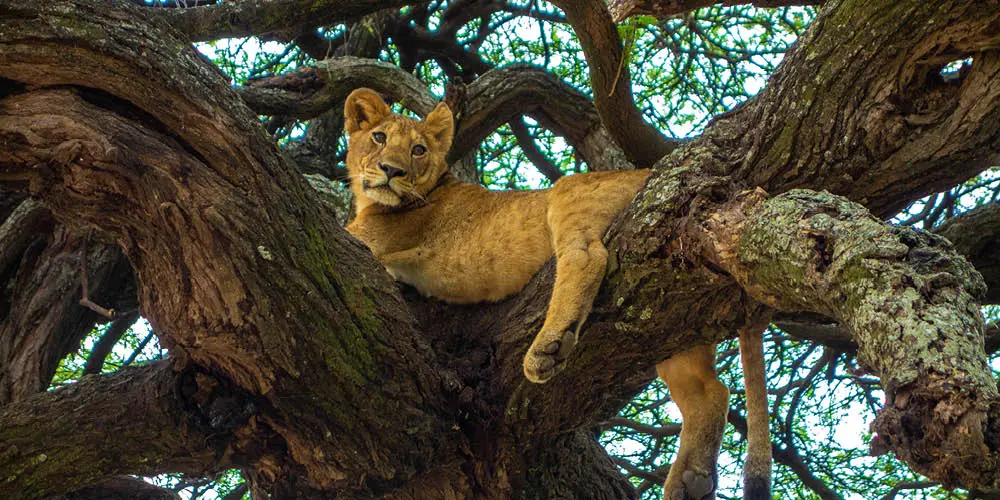
Manyara National Park is one of Tanzania’s richest ecosystems, supporting more than 100 mammal species and over 400 bird species. The park is best known for its tree-climbing lions, a rare behavior that attracts researchers and tourists alike. Although the exact reason for this behavior remains uncertain, it is believed that climbing trees helps lions escape insects, avoid wet ground, and observe prey from a higher position.
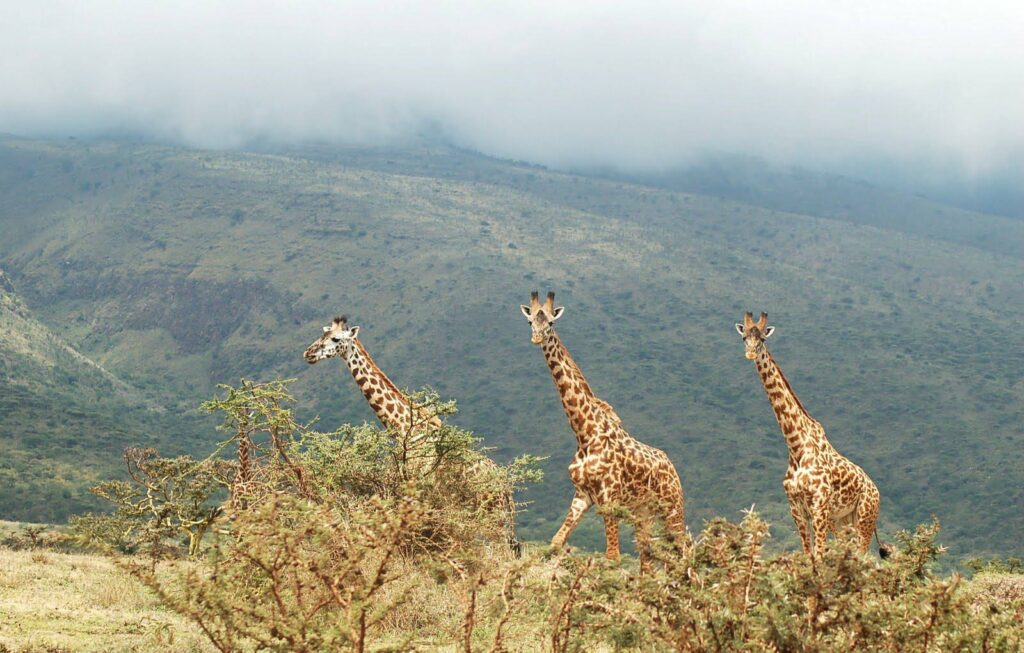
The park is also home to one of Tanzania’s largest elephant populations. These elephants play an important ecological role by dispersing seeds, creating pathways through vegetation, and maintaining healthy ecosystems. Other mammals commonly found in the park include buffaloes, giraffes, zebras, wildebeests, impalas, waterbucks, warthogs, hippos, baboons, blue monkeys, vervet monkeys, leopards, spotted hyenas, and several species of antelope.
Birdlife is exceptionally rich because of the variety of habitats found within the park. Flamingos often gather along the shores of Lake Manyara, especially when water conditions are favorable. Other commonly observed birds include pelicans, storks, herons, kingfishers, hornbills, fish eagles, cormorants, and numerous migratory species that travel from Europe and Asia during different times of the year.
The park’s vegetation is equally diverse, with more than 600 plant species identified. Groundwater forests contain giant fig trees, mahogany trees, palms, and evergreen vegetation, while acacia woodlands dominate the drier areas. Grasslands provide grazing grounds for herbivores, and marsh vegetation flourishes around wetlands and the lake. Together, these ecosystems maintain ecological balance by providing food, shelter, breeding areas, and migration routes for wildlife.
Tourism, Conservation, and Economic Importance
Tourism is one of the most important activities in Manyara National Park. Thousands of visitors travel to the park each year to enjoy game drives, birdwatching, wildlife photography, nature walks, and scenic viewing. The park’s accessibility from Arusha makes it an ideal destination for both short visits and extended safari tours. Visitors also enjoy spectacular views of the Great Rift Valley, Lake Manyara, and the surrounding forests.
The park contributes significantly to Tanzania’s economy through tourism revenue. Entrance fees, accommodation, transportation services, and tour operations generate income that supports wildlife conservation and national development. Tourism also creates employment opportunities for local communities, including tour guides, drivers, hotel workers, park rangers, artisans, and small business owners. Many local people benefit by selling handicrafts, agricultural products, and cultural experiences to tourists.
Conservation remains one of the park’s primary objectives. Tanzania National Parks (TANAPA) manages the park through anti-poaching patrols, habitat restoration, wildlife monitoring, environmental education, and scientific research. Conservation programs also involve nearby communities by promoting sustainable resource use and encouraging participation in wildlife protection. These initiatives help reduce illegal hunting, habitat destruction, and human-wildlife conflicts while preserving biodiversity for future generations.
Challenges and Conclusion
Despite its success in wildlife conservation, Manyara National Park faces several environmental and management challenges. Climate change has altered rainfall patterns, affecting water availability and wildlife habitats. Population growth around the park has increased pressure on natural resources through agricultural expansion, settlement development, and livestock grazing. Human-wildlife conflicts sometimes occur when animals leave the park in search of food or water, causing damage to crops and threatening local livelihoods. Illegal activities such as poaching and deforestation also continue to pose risks, although conservation efforts have reduced their impact.
To address these challenges, continued investment in conservation, community participation, scientific research, and sustainable tourism is essential. Strengthening environmental education programs can increase public awareness about the importance of protecting wildlife and natural ecosystems. Improved cooperation between government agencies, conservation organizations, and local communities will help ensure the long-term survival of the park’s biodiversity.
In conclusion, Manyara National Park is one of Tanzania’s most valuable natural treasures. Its unique combination of forests, grasslands, wetlands, and Lake Manyara supports an extraordinary diversity of wildlife and plant species. The park not only protects important ecosystems but also contributes significantly to tourism, employment, scientific research, and national economic development. Despite facing environmental challenges, effective conservation strategies and responsible tourism continue to safeguard its natural heritage. With continued protection and sustainable management, Manyara National Park will remain one of Africa’s finest wildlife destinations and an important symbol of Tanzania’s commitment to environmental conservation.